
“Handwriting is more than just a means of communication; it is a window into the mind and a reflection of one’s personality.”
Handwriting
Handwriting and Presentation
At St Julian’s Primary School, we value the importance of clear and confident handwriting as a vital skill for learning and communication. We follow a structured approach to handwriting development, helping children to form letters correctly, develop fluency, and take pride in the presentation of their work. Through regular practice, we encourage consistency in letter size, spacing, and joining, ensuring that all pupils can write neatly and at a comfortable speed. Handwriting is taught in a fun and engaging way, supporting fine motor skills and building confidence. We celebrate progress and encourage children to take care in their written work, as good handwriting is a skill that benefits them throughout their education and beyond.
Stages of Development – Pen/Pencil Grip

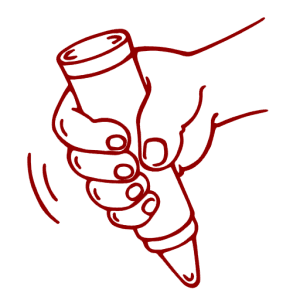
Stage 1 - Whole-hand grasp: using a fisted hand
This is typically how children hold a pencil/pen/crayon at 1-2 years old. They use most of their upper body muscles and movement comes mainly from the shoulder with the arm moving as a unit.Stage 2 - Beginning to use the fingers: no longer using whole-hand grasp
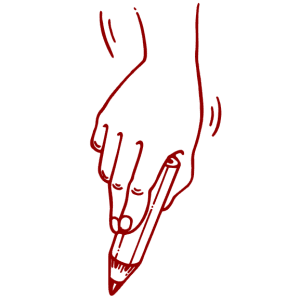
At 2–3 years old children begin to use the forearm to control the pen/pencil/crayon. Movement is still quite stiff but there may be some wrist movement.Stage 3 - Holds pencil between thumb and two fingers
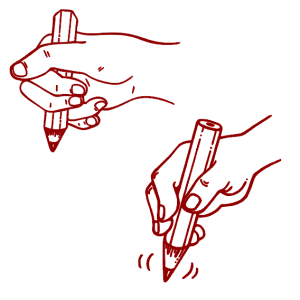
By the age of around 3–4 years old, children begin to show the crude beginnings of the tripod grip. The hand tends to move as a unit, with limited wrist movement. Children at this stage need more experiences that will strengthen their muscles (cutting, working with dough etc.) to develop fine motor skills and increase readiness for a precision pen hold.Stage 4 - Moving towards the tripod grip.
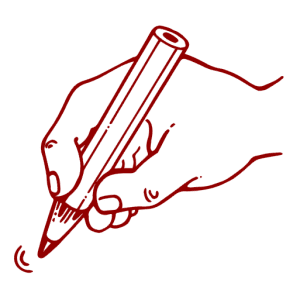
At the age of around 4–6 years old, we expect pupils to be holding their pencil near the point between first two fingers and thumb and use it with good control. They now begin to use their fingers and wrist to control movement of the pencil, holding it at a slight angle. They begin to move to a comfortable and efficient tripod grip: a precise three-way or tripod use of thumb, index and middle fingers.